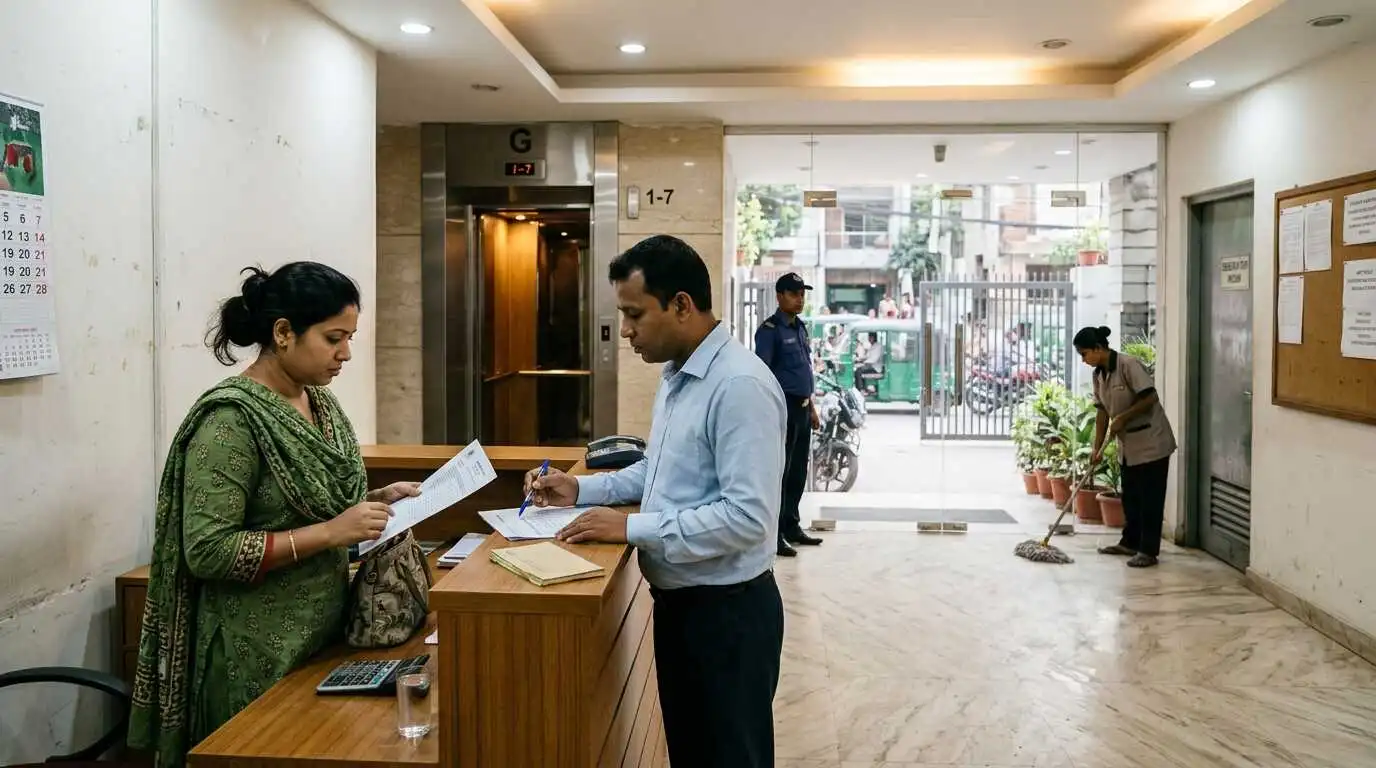
A flat service charge in Dhaka is the monthly fee you pay to run the shared parts of your building. Many buyers plan for the flat price and forget this cost. In some buildings it reaches ৳10,000 or more every month.
This blog explains what the charge pays for, what makes the amount change, and what to check before you buy or rent.
You will also see simple examples, so the numbers are easy to follow, whether you own the flat or rent it.
What Is a Flat Service Charge?
A flat service charge is a monthly fee that every flat pays to run and look after the shared parts of a building. It pays for guards, the lift, the generator, common lights and cleaning.
Owners often call it a maintenance fee. Rental ads usually call it a service charge. Both names point to the same thing, the apartment service charge in Bangladesh that sits on top of your rent or loan instalment. You can also see it as the flat maintenance cost in Dhaka that you share with your neighbours. The money should go back into the building.
What Does the Service Charge Usually Cover?
People often ask what does flat service charge include. It covers the daily cost of keeping shared spaces safe, clean and working. Items differ from one building to another, so ask for the list in writing.
Staff Salaries
This pays the guards, caretaker, cleaners and lift operator. These people work for all residents, so all residents share their pay. Cleaners also handle stairs, lobbies and garbage collection.
For many buildings, salaries are one of the biggest costs. Some buildings also collect a small extra amount around the two Eids for staff.
Lift Upkeep
A lift runs all day, so its parts wear out. Regular servicing keeps it safe and cuts the number of breakdowns. Buildings with two lifts pay for both.
Generator
The generator gives power backup when the grid goes off. The charge covers diesel and servicing. Some buildings add this cost to the monthly bill. Others charge it only on days the generator runs.
Common Electricity and Water Pump
Stair lights, lobby lights and parking lights run on a common meter. The water pump that fills the tank also uses common power. All flats share these bills.
Security and Safety
This covers CCTV cameras and fire safety equipment checks. Cameras break, and fire extinguishers need refills. A well-run building checks them on a set schedule.
Small Repairs to Common Areas
Think of broken bulbs, gate locks, stair railings and small leaks in shared pipes. These jobs come up often and cost little each time. Big jobs usually come from a reserve fund, which is covered below.
What It Does Not Cover
The service charge pays for shared spaces only. Your private costs stay with you.
- Your own utility bills. Electricity, gas and water used inside your flat are billed to you.
- Repairs inside your flat. Fixing your tiles, taps, wiring or cabinets is your job.
- Large building projects. Lift replacement or full exterior painting usually needs a reserve fund or a separate collection.
How Much Is the Service Charge in Dhaka?
Most Dhaka flats pay between ৳3,000 and ৳10,000 or more a month. This range comes from a published cost breakdown for Dhaka flat owners, and recent rental listings in Dhaka match it.
Here are rough ranges by building type.
| Building Type | What It Usually Has | Rough Monthly Range |
| Small building, no lift | Guard, cleaner, common lights, water pump | From about ৳3,000 |
| Mid-rise with lift and generator | Lift, generator, guard, CCTV, common power | About ৳6,000 to ৳7,500 |
| High-amenity building | Gym, pool or community hall, two lifts, extra staff | About ৳9,000 to ৳10,000+ |
These are rough figures, not fixed rates. Your building may charge less or more.
The amount depends more on services and the number of flats sharing the cost than on the area. Two buildings in the same neighbourhood can charge very different amounts. A building with a lift, a generator and a pool has more bills to split than a small building with one guard.
What Makes the Service Charge Go Up or Down?
Six things move the number most. Knowing them helps you judge whether a charge is fair.
- Number of flats sharing the cost. A guard's salary split across 60 flats is small. The same salary split across 8 flats is much bigger.
- Staff numbers and pay. More guards, cleaners or a lift operator mean a bigger payroll. A salary raise pushes the charge up.
- Generator use and diesel prices. Long load-shedding hours burn more diesel. When diesel gets costly, the bill follows.
- Number and age of lifts. Two lifts cost more than one. Old lifts break more often and need more repairs.
- Extra amenities. A gym, pool, community hall or rooftop garden needs staff, power and cleaning. Buildings made with low-cost materials can also need more repairs, as cheap construction can raise repair bills for owners over time.
- How many owners actually pay. Defaulters push the cost onto everyone else.
Suppose a building has 20 flats and its bills are ৳1,20,000 a month. Each flat pays ৳6,000. Now suppose 4 owners stop paying. The other 16 flats would need to pay ৳7,500 each to cover the same bills. Otherwise, the building has to cut services.
How Is the Service Charge Calculated?
Many readers ask how is service charge calculated in their own building. Buildings use three common methods. The right one depends on how much the flat sizes differ.
| Method | How It Works | Fair When |
| Same amount for every flat | Total cost divided by number of flats | Flats are about the same size |
| Per sqft | Total cost divided by total area, then multiplied by your flat size | Flat sizes vary a lot |
| Mix of both | A fixed share for staff and common bills, plus a size-based share for lift and amenities | The building has both big and small flats |
Suppose the same building above has 30,000 sqft of total flat area. The monthly bill of ৳1,20,000 gives a rate of ৳4 per sqft. A 1,500 sqft flat pays ৳6,000. A 1,200 sqft flat pays ৳4,800. With an equal split, both would pay ৳6,000.
If your building charges per sqft, ask which area it uses. It could be the carpet area, the covered area or the saleable area. The same flat can look bigger or smaller on each one, and that changes your bill.
Some buildings charge generator use separately. They bill it based on the hours the generator runs or on the diesel used. This is fairer for buildings with little load-shedding.
Ask which method your building uses and why. A clear answer is a good sign.
Who Manages the Service Charge? The Developer or the Owners
The usual pattern is simple. The developer or its management team runs the building for a while after handover. Then the flat owners' association or committee takes over.
A building should have written bylaws, an elected committee and monthly accounts. These three items show who decides how money is spent. You can see the same habits in how to spot a transparent developer in Bangladesh, where clear records and open communication matter.
This handover matters to owners. Once the committee takes over, owners control the budget, the staff and the repairs. Every owner shares the common areas, so every owner has a stake.
If you want to understand how apartment ownership works in Bangladesh, start with the share of common land and areas that comes with each flat.
What Is a Reserve Fund, and Why Does It Matter?
A reserve fund for apartments is money set aside for big repairs. Some people call it a sinking fund. It is collected once or in regular small amounts.
Without it, owners may face a one-time special charge when a large repair comes up. It pays for jobs like lift replacement, exterior painting, water tank repair or a generator overhaul.
Suppose a lift replacement costs ৳15 lakh and the building has 30 flats. Without a reserve fund, each owner must pay ৳50,000 at once. With a reserve fund, owners pay small amounts over many years. The big bill stops being a shock.
Ask these questions before you buy.
- Who holds the fund? It should sit in a building account, not in a personal account.
- How much is in it? Ask for the balance in writing.
- Has it been passed to the owners' association? If the developer still holds it, ask when it will move.
Owner or Tenant: Who Pays the Service Charge?
The answer to who pays service charge owner or tenant is usually set in the rent agreement. Many Dhaka rental listings show the service charge as a separate line from the rent.
That means the tenant often pays it every month. In several recent listings, it ran at roughly 10% to 20% of the monthly rent.
Get it in writing. The agreement should say what is included and whether the charge can rise. For a full checklist, read these tips for first-time renters in Dhaka.
Questions to Ask Before You Buy or Rent a Flat
Ask these questions before you pay any advance. The answers show how well the building is run and whether the flat service charge in Dhaka you are quoted is fair. If you are new to buying, this first-time home buyer's guide covers the other costs too.
- What is the current monthly charge, and what does it include?
Get the list in writing.
- Can I see the last 6 to 12 months of accounts?
Clear accounts show where the money goes.
- What is the reserve fund balance?
A very low balance in an older building is a warning sign.
- Are any big repairs planned?
A coming lift or painting job can mean a new collection.
- Who manages the building, and how are increases decided?
Look for a committee vote and a written notice.
- How many owners are behind on payments?
Many defaulters mean higher costs for those who pay.
- What is the full monthly cost?
Add the service charge, utility bills, and any extra fee for parking or generator use. Compare buildings on the total, not on the service charge alone.
If you are weighing a new project, a ready flat or an under-construction flat will give you different answers on these points. Ask about management handover for under-construction flats.
How to Keep the Service Charge Fair
A fair charge comes from open habits, not from a low number. These five habits help most buildings.
- Share clear monthly accounts. Every owner should see income and spending.
- Hold a yearly owners' meeting. Owners can vote on the budget and ask questions.
- Get more than one quote for big jobs. Compare at least two or three quotes for lift, painting and generator work.
- Save energy in common areas. LED lights and a set generator schedule cut power and diesel bills.
- Pay on time. When everyone pays, nobody carries extra cost.
What If There Is a Dispute?
Most disputes start with unclear accounts or a sudden increase. Stay calm and follow the steps in order. This is general information and not legal advice.
- Ask for the accounts in writing. Name the months you want to see.
- Raise the issue with the committee. Put your concern in a short written note.
- Check the bylaws and the sale deed. These documents set the rules for charges and increases.
Here is how flat registration and the sale deed work.
- Try mediation. A neutral person, such as a respected senior owner or a legal adviser, can help both sides agree.
Final Thoughts
The flat service charge in Dhaka is part of the real price of a flat. It pays for the people and systems that keep your building safe and working. A clear list of services, open accounts, and a healthy reserve fund show a well-run building.
Ask the questions in this blog before you sign. If you are comparing new homes, you can explore PDL's ongoing projects or get a quote from the team.
FAQs on Flat Service Charges in Dhaka
What Is a Normal Flat Service Charge in Dhaka?
Most Dhaka flats pay between ৳3,000 and ৳10,000 or more a month. Mid-rise buildings with a lift and generator often sit around ৳6,000 to ৳7,500, based on recent listings. High-amenity buildings can reach ৳9,000 to ৳10,000 or more. Ask your building for its exact figure.
Is Paying the Service Charge Mandatory?
Yes, in practice. The charge is usually set in the sale deed, the bylaws or the rent agreement, and it keeps shared services running. Many bylaws add a late fee for missed payments.
Does the Owner or the Tenant Pay the Service Charge?
It depends on the rent agreement. In many rentals, the tenant pays it monthly on top of the rent. The owner usually pays it for a flat that sits empty.
Does the Service Charge Include Generator Costs?
Sometimes. Some buildings include a share of generator costs in the monthly charge. Others bill generator use separately, based on hours run or diesel used. Ask which method your building follows.
What Is a Reserve Fund in an Apartment Building?
A reserve fund is money saved for large repairs, such as lift replacement or exterior painting. It is collected once or in small regular amounts. It spares owners from paying a huge bill all at once.
Can the Service Charge Be Increased?
Yes. Costs like staff pay and diesel change over time, so charges can rise. A fair increase is explained with accounts, approved by the committee and told to owners in advance. Tenants should check the rent agreement to see whether the charge can rise.
What Happens If a Flat Owner Doesn't Pay?
The committee usually sends a reminder first. Many bylaws then add a late fee, and the committee may send a legal notice. Other owners end up covering the gap in the meantime. Talk to a legal adviser before any step that affects the unpaid flat's services.