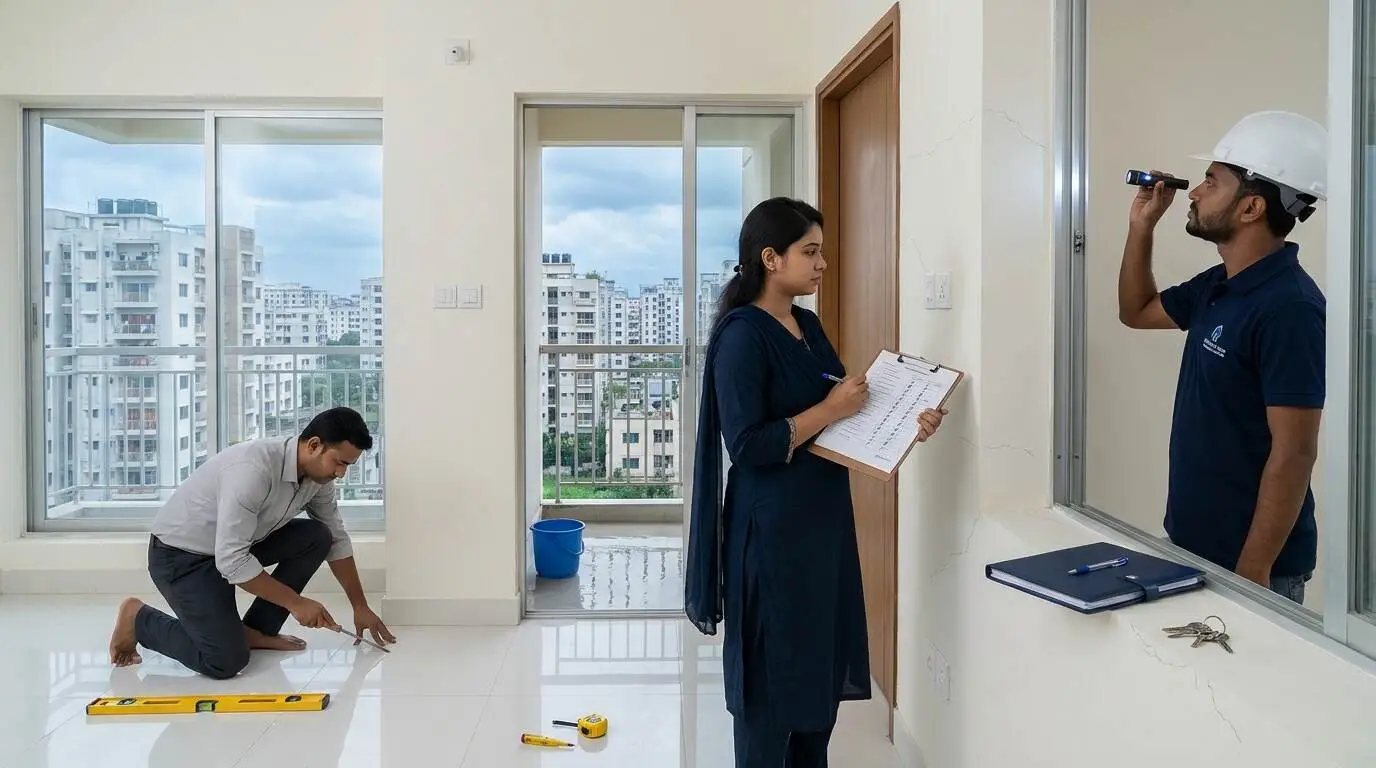
A flat handover checklist is a comprehensive verification process that home buyers use to inspect the structural integrity, legal documentation, utilities, and finishing quality of a new apartment before taking physical possession.
Conducting a thorough pre-handover walkthrough ensures all construction snags, waterproofing defects, and missing documents are identified and formally documented on a snag list, protecting your financial investment before final payments are released.
Taking possession of a new home is a major milestone, but rushing through the physical walkthrough can lead to costly post-move repair bills and legal headaches down the road.
Working with a trusted real estate company ensures a smooth construction process, but conducting your own structured inspection remains your most important responsibility as a buyer. Whether you are inspecting tile bonding in ongoing apartment projects, running a 24-hour waterproofing test, or confirming utility sanction letters, having a systematic checklist ensures nothing gets overlooked.
Documents to verify before you even book the inspection
Paperwork comes first. If a document is missing or looks off, fix that before you even step into the flat, as transparent oversight from the management team ensures all regulatory baselines are met.
| Document | What It Proves | Who Issues It |
| Occupancy Certificate | The building is legally fit to live in | RAJUK or the relevant city authority |
| Fire Service clearance + approved fire safety plan | Fire safety systems were inspected and approved on paper | Bangladesh Fire Service and Civil Defense |
| Approved building plan match | What’s built matches what was approved | Developer, verified against RAJUK plan |
| Registered deed status | Your legal ownership is recorded | Sub-Registry office |
| Utility sanction letters (WASA, DESCO, Titas) | The building is legally connected to water, power, and gas | Respective utility authorities |
| Parking allotment | Your specific slot is officially assigned to you | Developer |
| Maintenance deposit receipt | You’ve paid into the building’s upkeep fund | Developer |
One thing to keep in mind: a fire clearance on paper doesn’t confirm the system actually works.
The certificate tells you the plan was approved. It doesn’t tell you the alarm will sound or the extinguisher still has pressure. You check that yourself, and we’ll cover how further down.
Each of these items connects back to the broader property registration documents in Bangladesh process, which is worth understanding in full before you sign anything at all.
What to collect on handover day itself
This is a separate step from document verification and deserves its own list.
These are the flat handover documents in Bangladesh that should physically change hands on the day you take possession:
- Possession letter
- Handover certificate
- Warranty cards and appliance manuals
- Concealed plumbing and electrical layout drawings
- Parking allocation map
- Keys, counted by type: flat, main gate, storage or cellar, and letterbox
That last item may seem small, but buyers often forget it. Count every key against every lock before you leave the building. If one letterbox key goes missing, you’ll be chasing it for months.
Good to know: Ask for the concealed layout drawings even if the developer doesn’t offer them.
Years from now, when you want to drill a wall or fix a pipe, these drawings save you from guessing where the wiring runs.
How to prepare for the inspection
Walking in unprepared lets small defects slip by. A little planning makes your inspection far more effective. Start by bringing an engineer, an electrician, or an experienced friend to catch any technical issues you might miss.
Pack a basic toolkit containing a torch, electrical tester, tape measure, spirit level, camera, and a bucket for water testing.
Always visit during daylight, as natural light reveals wall cracks and paint stains that artificial lighting hides; scheduling right after rain will also help spot active leaks.
Plan for two to three hours and inspect room by room, checking all walls, floors, fittings, and outlets in one space before moving to the next. Finally, bring your signed agreement and specification annexure to verify that every detail matches what you paid for.
Room-by-room checklist
Work through each space methodically.
Rushing this step is the single biggest reason defects get discovered months after handover, once they’re harder and costlier to fix.
Walls and ceilings: Look for cracks, uneven plaster, and damp patches, especially near corners and where walls meet the ceiling.
Floors: Tap each tile gently with a hard object. A hollow sound indicates the tile isn’t properly bonded to the surface below, and it will eventually crack or lift.
Doors and windows: Open and close every one. They should move smoothly without scraping, and locks should engage without force.
Switches and sockets: Test every switch and socket with your tester. A socket that doesn’t register power is a problem you want flagged now, not after you’ve moved your furniture in.
MCB panel and earthing continuity: Check that the panel is labeled correctly and that earthing continuity is intact. This isn’t optional. Faulty earthing is a genuine safety risk.
Kitchen: Check the exhaust, the sink drainage, and whether the platform matches the agreed specification.
Balconies and drainage: Confirm the balcony floor slopes toward the drain, not away from it. Standing water on a balcony is almost always a sign of poor slope work.
AC points: Confirm the outdoor unit points and indoor wiring are placed where your agreement says they should be, and that the drainage line is already routed out.
The waterproofing test you can’t skip
This is the one step most buyers in Dhaka skip, and it’s the biggest gap we consistently see compared to how most handover guides are written.
Pour water to a measured depth, about one to two inches, on the bathroom and balcony floors.
Leave it for 24 hours. Then go down to the flat directly below and inspect the ceiling for any damp patch or seepage.
Once tiling is already down, this test is the only reliable way to check waterproofing. You cannot see a waterproofing membrane through finished tile, so a dry visual inspection tells you almost nothing about whether the layer underneath is actually sealed.
Insist on doing this test before you sign any acceptance document, because once you’ve moved in, proving the leak existed at handover becomes far harder.
Fittings, finishing quality, and the other physical checks covered here all sit inside the wider apartment buying checklist that applies long before you ever reach handover day.
Check the area and the specification
Measure the flat against the carpet area and floor plan stated in your agreement. A small variance is common in construction, but your agreement should specify how any shortfall or excess is adjusted to the price once both sides confirm the final measurement.
Match every fitting against the named-brand specification annexure attached to your contract, ensuring the finishing quality meets the standards used in completed residential developments.
If the agreement names a specific brand of tiles, sanitaryware, or electrical fittings, check the actual brand installed.
Developers sometimes quietly substitute materials, and this is your chance to catch it before accepting.
Bangladesh’s climate and why it matters for this inspection
Dhaka’s climate changes what “passing inspection” actually means, and this is where a generic checklist falls short.
Humidity here runs high for most of the year, and that humidity drives dampness into walls and ceilings long before any visible crack appears.
A flat can look perfectly dry during a January inspection and still develop damp patches by the next monsoon, simply because the underlying moisture barrier was never properly sealed.
Monsoon seepage follows predictable patterns too. Water finds its way in through balcony joints, AC drainage points, and roof slabs during heavy rain, and these are exactly the spots a dry-season inspection alone will miss.
This is why the waterproofing test above matters so much, and why we recommend a second inspection after the first real monsoon if your handover happens outside the rainy season.
A single dry-day walkthrough simply cannot tell you how the flat behaves under real Dhaka weather.
Common areas and building systems
Your flat doesn’t exist in isolation. The building’s shared systems affect your daily life just as much as what’s inside your unit.
Ask for the lift’s valid inspection certificate.
Confirm the generator’s rated capacity against the backup hours actually promised in your sales brochure or agreement, because a generator that’s undersized for the building will fail exactly when you need it most.
Check that the water tanks and pumps are functioning, that security arrangements match what was promised, and that your allotted parking slot is physically marked and accessible.
Fire safety checklist for common areas:
- Smoke detectors installed and functioning
- Fire alarm system tested
- Extinguishers present and within inspection date
- Fire hydrants accessible, not blocked by storage
- Exit doors open freely and aren’t locked or obstructed
- Emergency signage clearly visible
- Emergency lighting working in stairwells
Utilities and meters
Confirm your electricity meter number and note which area supplier serves the building, whether that’s DESCO, DPDC, or another utility depending on your location.
Check the water source and get the gas-versus-LPG arrangement confirmed in writing, since this affects both your monthly costs and your kitchen setup.
Take dated photos of both the electricity and water meter readings on handover day itself. This single habit protects you if there’s ever a billing dispute about usage before versus after you took possession.
The process of transferring utility accounts into your name typically starts within the first 30 days after handover, alongside the other formalities covered later in this piece.
How to write a snag list
A snag list is your formal, dated record of every defect you find. It protects you by creating a paper trail that the developer can’t later dispute.
Use a simple table format:
| Location | Defect Description | Severity | Builder Response | Target Date | Status |
| Master bathroom floor | Tile sounds hollow near drain, suspected poor bonding | High | Pending | - | Open |
| Living room wall, east corner | Hairline crack near ceiling joint | Medium | Pending | - | Open |
Photograph every defect with something for scale next to it, like a ruler or a coin. A photo with no size reference is easy to dismiss later.
Email the completed list to the developer the same day you inspect, with photos attached.
This creates a timestamped record that’s far harder to argue with than a verbal complaint made weeks later.
Understanding the Defects Liability Period
The defects liability period in Bangladesh is the window after handover during which the developer remains responsible for fixing construction defects at no extra cost to you.
In common practice, this window typically runs six to twelve months from the date of possession, though the exact length should always be confirmed in your own agreement, since it isn’t fixed by a single national standard.
During this period, the developer is generally expected to fix structural and workmanship defects that existed at handover but weren’t visible until later use revealed them, things like a leak that only shows up after the first heavy rain, or a fitting that fails after a few months of normal use.
What it typically doesn’t cover is damage from your own use, normal wear and tear, or changes you make to the flat after moving in.
Always read your specific agreement’s wording on this, because the exact obligations can vary from one developer’s contract to another.
What to do if you find defects
You have two real options once your snag list is complete: accept the flat with the list formally attached, or decline to accept until the issues on the list are fixed.
Either way, the timing of the final payment matters here.
Releasing your full and final payment before defects are resolved weakens your position to get them fixed later, so think carefully before you do.
Keep every communication in writing. Verbal promises from site staff don’t hold up in a dispute, so emails or formal letters should be your only channel for raising issues.
If the developer doesn’t respond or resolve issues within a reasonable window, Bangladesh’s real estate industry has an escalation path:
- Send written notice of the unresolved defects, with your snag list and photos attached.
- Allow the developer a defined response window, as stated in your agreement, to act.
- If unresolved, file a complaint with REHAB (the Real Estate & Housing Association of Bangladesh), which handles disputes between buyers and member developers.
- As a final step, legal recourse is available under the Real Estate Development and Management Act, 2010.
Important: The Act includes provisions on repair obligations that buyers sometimes reference, but the exact scope of what’s legally enforceable under it can be technical. Before relying on any specific section to resolve a dispute, confirm the current interpretation with a qualified lawyer, as this is general guidance and not legal advice.
This same escalation path becomes especially relevant when you’re dealing with handover delays in Bangladesh, since late possession often comes hand in hand with the same documentation gaps described here.
What to sign and what not to sign
Your possession letter and handover certificate should both carry clear dates and be on the developer’s letterhead. If your snag list isn’t already resolved, attach it as a formal annexure to whichever document you sign, so it’s referenced in the official record rather than left as a separate, easily lost piece of paper.
Avoid signing anything with blanket wording like “accepted in good condition.” That single phrase can waive your right to raise issues later, even ones covered by the defects liability period.
If a developer pushes you to sign such a document, it’s reasonable to decline until the wording is adjusted or your snag list is formally attached instead.
Confirm the timing of your deed registration once your physical possession is settled, since the two processes don’t always occur on the same day.
First 30 days after you get the keys
The work isn’t finished once you have your keys in hand.
In the first month, get your utility accounts formally transferred into your name, since billing often stays under the developer’s name until you take this step.
Your owners’ association terms and service charge obligations also need to be reviewed early, so you know what you’re paying for and when.
This is the same window during which you should begin the property mutation and registration process in Bangladesh, which transfers the property record into your name at the local land office.
If any defect surfaces during these first weeks that you missed during inspection, report it in writing immediately, and make sure it’s documented before your defects liability period closes. Waiting past that window can cost you your right to a free fix.
Final thought
A smooth handover isn’t a matter of luck; it is the direct result of an empowered buyer who arrives with a clear plan, a flashlight, and the confidence to say “not yet” when something doesn’t meet standard.
Taking your time at the threshold before accepting the keys is your single best protection; once you sign a blanket acceptance letter, your leverage shifts. By systematically verifying documents, testing waterproofing under Dhaka’s climate, and securing a signed snag list, you ensure your hard-earned property investment is fully protected from day one.
At PDL Real Estate, we build our entire development process around transparency, buyer-first documentation, and uncompromised build quality so you never have to guess what lies behind the paint.
Planning your next property purchase or need expert guidance? Get a quote today and speak with our property consultants to experience a seamless, secure journey home.
Frequently Asked Questions
Can I refuse possession if there are defects?
Yes. You can decline to formally accept the flat until listed defects are fixed, or accept it with your snag list attached so the issues remain on record. Signing a blanket acceptance without listing defects weakens your ability to raise them later.
What documents should I receive at handover?
At minimum, you should receive your possession letter, handover certificate, warranty cards and appliance manuals, concealed plumbing and electrical layout drawings, a parking allocation map, and the full set of keys, counted by type.
Is an occupancy certificate required before I take possession?
Yes. The Occupancy Certificate confirms the building has been inspected and is legally fit for habitation. Verify this before booking your inspection, not after.
Who pays to fix defects after handover?
During the defects liability period, the developer is generally responsible for fixing construction defects that existed at handover, at no extra cost to you. Your own agreement will set out the specific terms.
How long is the defects liability period in Bangladesh?
In common practice, it typically runs six to twelve months from the date of possession, though the exact duration should always be confirmed in your individual agreement.
How long does a handover inspection take?
Plan for roughly two to three hours, moving through the flat room by room rather than checking one system at a time across the whole unit.
Should I hire an engineer?
It helps. An engineer or electrician will catch structural and wiring issues a first-time buyer is likely to miss, and the cost is small compared to the defects it can catch before you accept the flat.
What if the flat is smaller than agreed?
Your agreement should specify how any variance between the agreed and measured area gets adjusted in price. Confirm the final measured area in writing before you accept possession.
Should I pay the final installment before or after inspecting?
Inspect first. Releasing your full and final payment before your snag list is resolved reduces your leverage to get outstanding defects fixed.