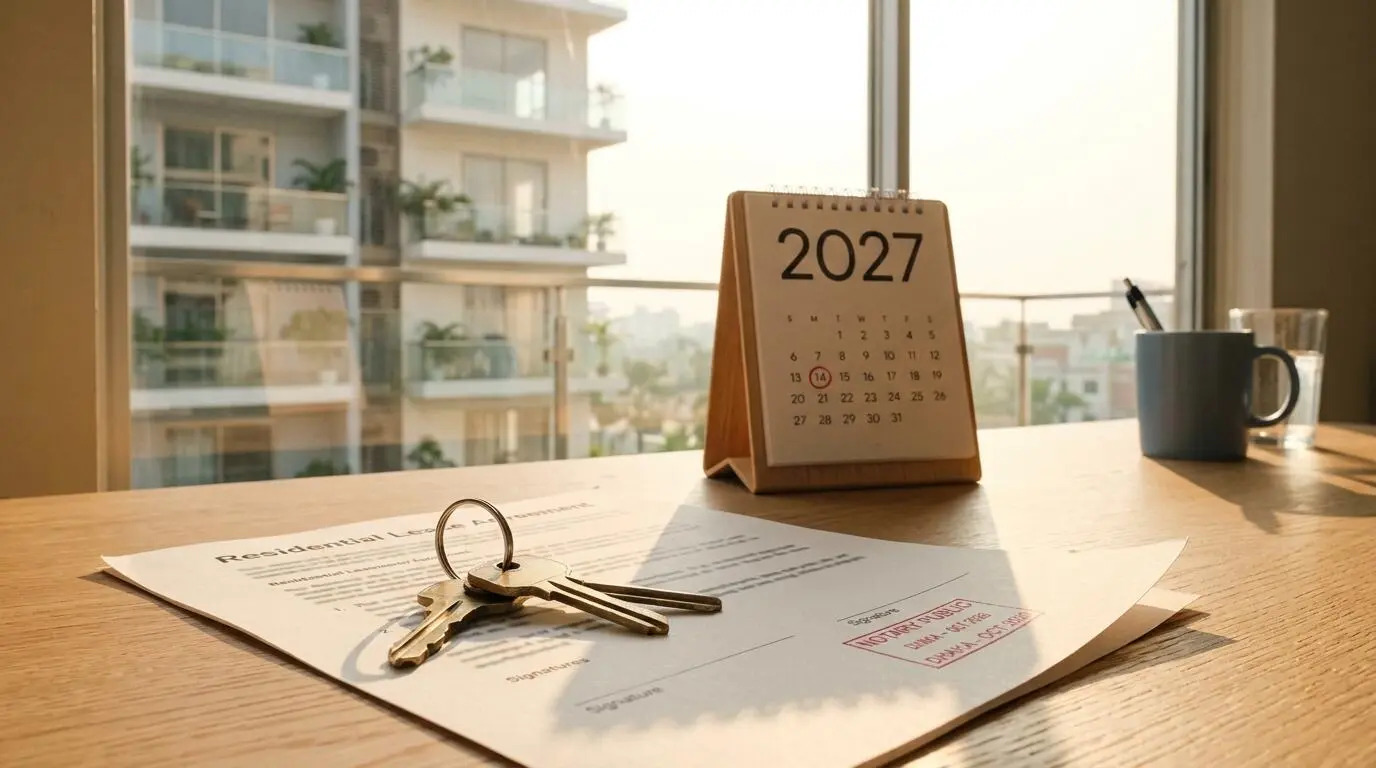
Your handover date was in June. It is now December. You are still paying rent on your old flat and loan instalments on the new one. Every call to the developer ends with the same answer. Soon.
This is one of the most common complaints in the Bangladesh property market. It is also one of the least understood. Most buyers do not know that the law already gives them a right to compensation when a developer misses the agreed date. Most agreements already contain a clause about it, buried in a page nobody read carefully before signing.
This guide covers four things. What the law says when a handover is late. What your agreement should contain before you sign it. Why projects actually fall behind in this country. And what you can do if your own handover has already slipped.
PDL Real Estate has put this together as a plain reference for buyers, not as a sales page.
What happens legally if a developer misses the handover date
If a developer fails to deliver within the time stated in your agreement, you have a right to your money back along with compensation. This comes from Section 15 of the Real Estate Development and Management Act, 2010.
Here is what the section sets out:
- The developer must refund the total amount you paid for the property.
- On top of the refund, they must pay the compensation stated in your agreement.
- Payment must be made by account payee cheque.
- The full amount must be paid within six months.
- It can be split into no more than three instalments.
- If your agreement does not state a compensation amount or rate, the rate is 15% of the total amount you paid.
That last point matters more than people realise. A blank compensation clause does not mean no compensation. The law fills the gap for you.
There is a second provision worth knowing. Section 30 of the same Act covers failure to transfer possession as agreed. The penalty can reach two years in prison, a fine of up to Tk 20,00,000, or both.
One caution before you act on any of this. The 2010 Act covers both flat buyers and landowners in joint venture projects, and the wording is applied differently depending on which one you are. Are you a buyer planning to make a claim? Show your agreement to a property lawyer first. Ask how Section 15 applies to your contract. Do not rely on a blog post for that, including this one.
What your deed of agreement should say about the handover date
Your contract decides how strong your position is. Read these six points before you sign anything.
A firm month and year. Not "late 2026". Not "within 36 months of commencement", unless the commencement date is also fixed in writing. A real date you can point to.
A compensation rate for each month of delay. Stated as a taka figure or a clear percentage. If the clause is blank, the 15% rule applies, but it is far better to have a monthly rate written in.
A defined grace period. Most agreements allow the developer extra months beyond the handover date. Find out how many, and find out exactly when that period ends.
A narrow force majeure clause. This clause lists events that excuse a delay. Natural disaster and political unrest are reasonable. A clause that also excuses delays from material price rises or slow approvals is far too wide, because those happen on almost every project.
Refund terms. If the delay passes a stated limit, can you walk away with your money and compensation? What is that limit?
Proper validation. Check that the terms and signatures are validated the right way. Property guidance published by The Daily Star makes this point. An agreement that is not validated properly may not carry the legal weight you think it does. Our guide on the flat registration process in Bangladesh covers validation steps in detail.
The clause most buyers skip
Look at how your agreement treats late payment on both sides.
Almost every developer agreement charges you interest if you are late with an instalment. The rate is usually clear and the penalty starts quickly. Then look for the matching clause that applies when the developer is late with your flat. In many agreements it is weaker, capped at a low monthly figure, or missing altogether.
You are allowed to ask for that to be balanced before you sign. Many buyers never ask because they do not notice the gap.
Why apartment projects actually get delayed in Bangladesh
Most delays are not caused by bad weather. They are caused by money and management, and this is well documented.
Research on privately funded large building projects in Bangladesh ranked the main causes of schedule delay. The top ones were:
- Lack of experienced construction managers
- Selection of the lowest bidder
- Funding shortages
- Poor planning and scheduling
- Shortage of skilled workers
- Contractor cash flow problems during construction
A separate survey of more than one hundred construction stakeholders in Bangladesh found a similar picture. The biggest factors there were:
- Delays in progress payments
- Rework caused by mistakes during construction
- Shortage of skilled labour
- Poor monitoring of site activity
Notice what runs through both lists. Cash flow.
The Daily Star has reported an estimate from a realtor with three decades in the business. Of the more than 1,200 developers in Bangladesh, fewer than ten fund their projects themselves. Treat that as an industry estimate rather than an audited figure, but the direction is clear enough.
Here is why it matters to you. If a developer is paying for construction out of the instalments coming in from buyers, the site runs at the speed of those payments. When sales slow or buyers fall behind, work slows with them. The flat you booked is being built with money that has not arrived yet.
This is also why delay and build quality are linked. When funds run short near the end of a project, the parts that get rushed are waterproofing, finishing, plumbing and electrical work. Those are the parts you live with for the next twenty years, which is why PDL checks structure, electrical, plumbing and finishing in separate rounds, as set out in its construction process.
What to do if your handover is already late
Work through these steps in order.
1. Put it in writing. Stop relying on phone calls. Send an email or a letter asking for a revised handover date in writing. Keep every reply. If a dispute follows, this record is your evidence.
2. Read your compensation clause again. Check the rate, the grace period, and the date the grace period ends. Work out what you are owed if the delay continues.
3. Go to REHAB first if the developer is a member. The Real Estate and Housing Association of Bangladesh offers a route for settling disputes. Reporting in The Daily Star notes this as a first step buyers can take before court.
4. Try to settle directly. Section 36 of the 2010 Act expects both sides to attempt a mutual resolution before the matter goes further. Skipping this step does not help you.
5. Go to court if settlement fails. The case then proceeds under the Real Estate Development and Management Act, 2010. Take your agreement and your written correspondence to a property lawyer.
6. Do not accept possession just to end the wait. Never take keys without the Occupancy Certificate, and check the other property registration documents before you sign the handover. Without it, the building is not legally cleared for people to live in. That becomes your problem later, when you try to sell the flat or borrow against it.
How to check a developer before you sign
You cannot see the future of a project. You can check the past of the company building it.
Ask for their handover record. Not a brochure claim. Ask for the last three completed projects with two dates each. The date promised in the agreement, and the date keys were actually handed over. A transparent real estate developer who delivers on time will have this ready.
Visit a completed project and talk to residents. Ask them when they were supposed to receive the flat and when they actually did. Residents answer this honestly. Sales offices do not always.
Ask how the project is funded. You will not always get a full answer. You will learn something from how the question is handled.
Check RAJUK approval, and check the building matches it. Approval alone is not enough. Added floors or changed structure means the finished building no longer matches what was approved, and getting the Completion Certificate then becomes slow.
Check whether the project sits inside a planned area. Utility connections are a common cause of late handover. A project inside a planned township usually has road, water and power planning already handled at the area level.
Check REHAB membership. Membership does not guarantee a project runs on time. It does give you a dispute route if it does not.
Where PDL Real Estate stands on handover
PDL Real Estate builds its ongoing projects inside Jolshiri Abashon, a planned residential township in Rupganj, Narayanganj, developed under RAJUK’s oversight. The township covers around 2,100 acres. It has its own road, utility and infrastructure planning. That matters at handover. One common cause of delay is waiting on utility and access work that sits outside the developer's control.
We would rather you check than take our word for it, which is what a transparent real estate developer should expect from buyers. Use the same steps listed above. Ask us for the dates. Visit a completed project. Speak to the people living there.
Frequently asked questions
What compensation can I claim if my developer delays handover in Bangladesh?
Section 15 of the Real Estate Development and Management Act, 2010 covers this. A developer who fails to deliver on time must refund the total amount you paid. They must also pay the compensation stated in your agreement. Payment is made by account payee cheque, within six months, in up to three instalments. If no compensation rate is written into the agreement, the rate is 15% of the total amount paid. Check your own contract with a lawyer before making a claim.
How long is a normal grace period in an apartment handover agreement?
There is no fixed legal grace period. It is whatever your agreement says, and it varies between developers. Six months is common in Bangladesh, but some agreements allow longer. Find the clause before you sign and ask for the period to be shortened if it seems wide.
Can I refuse to take possession if the flat is not finished?
Yes. You can record the unfinished items in a written snag list, refuse to sign the handover certificate, and ask for the work to be completed first. Taking possession and signing off can weaken your position on fixing those items later. Never accept possession without the Occupancy Certificate.
What is the difference between a Completion Certificate and an Occupancy Certificate?
A Completion Certificate confirms the building was constructed according to the approved plan. An Occupancy Certificate confirms the building is cleared for people to live in. You need to see both. The Occupancy Certificate is the one that matters most at handover, because without it the flat is not legally approved for occupation.
Can I complain to REHAB about a developer?
If the developer is a REHAB member, yes. REHAB provides a route for resolving disputes between buyers and member developers. Reporting in The Daily Star points to it as a first step before court. It is one reason to check membership before you buy.
Does the developer have to pay me if the delay was caused by a utility connection?
It depends on how your force majeure clause is written. Some agreements list delays in utility connections as an excused cause, which removes your claim. Others do not. This is one of the specific reasons to read that clause closely before signing rather than after.
Should I pay the final instalment before or at handover?
Hold back a meaningful portion of the price until handover wherever the agreement allows it. Money already paid weakens your position. Buyer guidance in Bangladesh consistently advises keeping a share of the payment tied to actual possession.