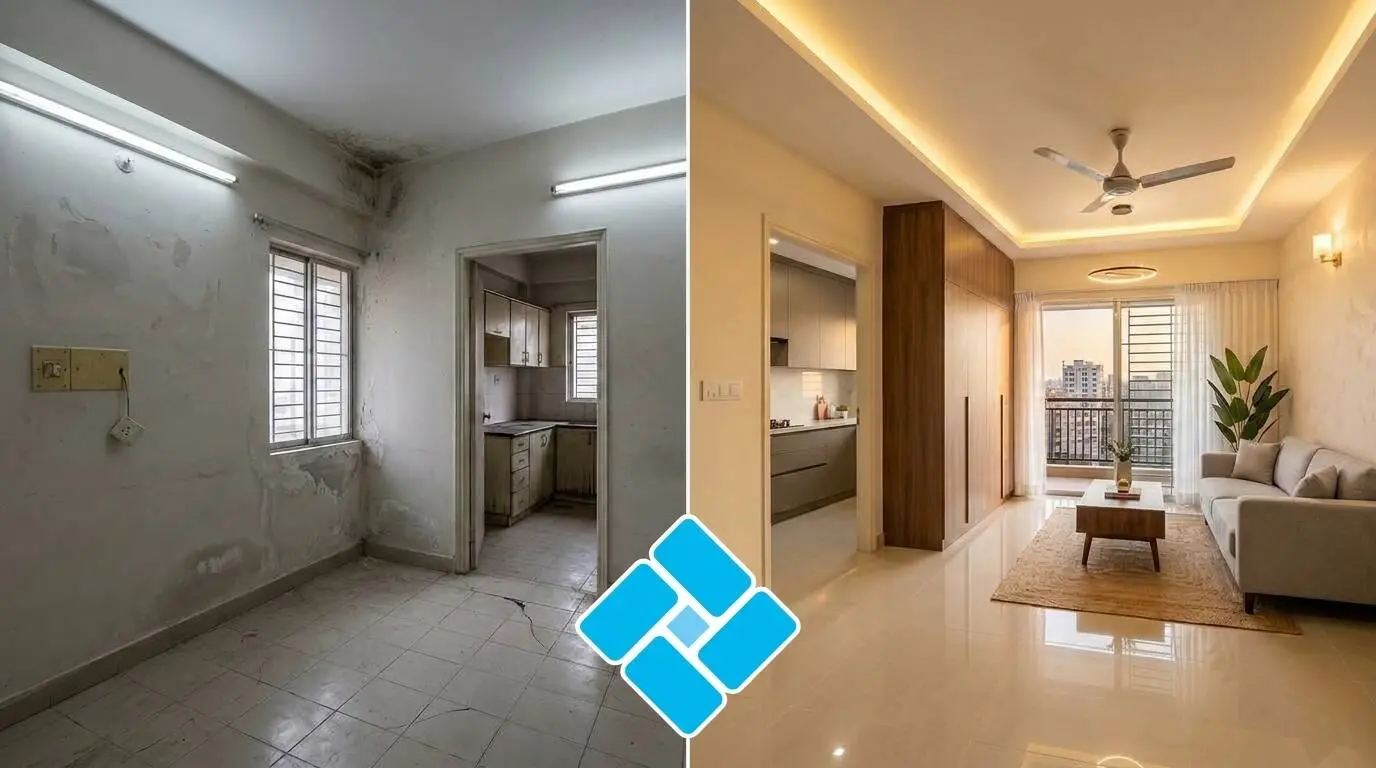
The best renovation ideas to improve the value of a flat in Bangladesh are small repairs, a kitchen and bathroom refresh, and low-cost updates like paint and lighting.
Big luxury makeovers rarely pay for themselves. This guide is from a reputed real estate agency in Bangladesh. PDL shows what to fix first, which upgrades pay off, and what to avoid.
Fix these first
- Dampness and seepage. Find the source and stop it before the monsoon. Painting over damp does not solve it.
- Leaks, wiring, and locks. Repair plumbing, replace old switchboards, and fix broken doors. Buyers and tenants notice these problems faster than upgrades.
Refresh the rooms buyers judge most
- Kitchen. Replace the cabinet doors, countertop, and tiles, and install a powerful exhaust fan. Keep the layout and plumbing where they are.
- Bathrooms. Update worn fittings, then add anti-slip tiles, ventilation, and a geyser.
Add cheap, visible touches
- Paint and lighting. Neutral colors and LED fittings make rooms look larger, brighter, and cleaner.
- Storage and a safer main door. Built-in wardrobes make rooms feel bigger, and a sturdy lock makes the flat feel safer.
Skip these
- Luxury materials, bold designs, and layout changes. They cost a lot and rarely recoup the cost.
Which Renovations Actually Add Value to a Home?
The renovations that increase home value fix problems first.
Next, they refresh the rooms buyers judge most: the kitchen and bathrooms. Then they add low-cost updates that people can see. Big luxury makeovers rarely pay for themselves.
This order works because buyers do not pay for effort. They pay for a flat that looks sound, clean, and ready to move into.
A damp wall or a faulty switchboard cuts an offer faster than a new feature raises it. A tidy kitchen and a fresh bathroom, on the other hand, tell buyers the whole flat has been looked after.
Data from other markets shows the same pattern.
According to Remodeling’s Cost vs. Value figures, as cited by Angi, minor kitchen remodels return about 96% ROI, while major remodels return around 50%. Zillow’s report finds that a minor kitchen remodel gives the best return in every region it covers.
Another analysis says a major upscale remodel returns under 55 cents on the dollar, because buyers pay neighborhood prices, not renovation prices.
Those numbers come from other housing markets, so do not apply them directly to Dhaka.
The lesson still carries over. The best home improvements that add value are targeted, modest, and visible. A flat in Badda, Aftabnagar, or Rupgonj will sell for what similar flats in that area sell for.
A smart renovation helps your flat reach the top of that range. An extravagant one rarely pushes it past.
Think of it as three layers. Layer one repairs anything broken, leaking, or unsafe. Layer two refreshes the kitchen and bathrooms.
Layer three adds cheap touches such as paint, lighting, and locks. Finish each layer before you start the next.
Fix These Problems Before You Spend on Any Upgrade
Buyers and tenants notice problems faster than upgrades. A visitor spots a stained ceiling, a loose socket, or a door that won’t lock within minutes.
They may never notice new cabinet handles. So your first rupees should go to defects, not decoration.
Dampness and Seepage
Dampness is the top issue in flats in Bangladesh. You will see peeling paint, dark patches, white salt deposits, and a musty smell. These usually appear near bathrooms, outer walls, roof-level flats, and window frames.
Painting over damp does not solve it, because the moisture keeps coming.
The paint bubbles and peels again, often within one season. One Bangladesh damp-proofing guide says the job is to find the source of the moisture and stop it there.
The same guide names three main types: rising damp, penetrating damp from rain or leaks, and condensation. It lists Dhaka’s high water table, heavy monsoon rain, humidity, and hidden plumbing leaks among the causes.
Top-floor flats face an extra risk from the roof.
Another Bangladesh guide states that flat terraces are the most common source of water leakage in buildings.
Intense summer heat, followed by sudden monsoon downpours, causes concrete slabs to expand and contract. That movement opens fine cracks that let water in.
Here is the process that works:
- Trace the source. Check the terrace, external walls, window frames, bathroom floors, and pipes.
- Fix the cause. This may mean waterproofing the roof or bathroom floor, sealing cracks, repairing a pipe, or clearing a blocked drain.
- Let the wall dry fully.
- Repaint, using damp-resistant paint if the area still sees moisture.
Do this before the monsoon, not during it. Dry weather lets repairs cure properly and shows you whether the fix worked. Rain makes repairs harder and hides the true cause.
Waterproofing is one area where an experienced developer’s team can help, and we see these problems across many buildings.
Plumbing Leaks and Worn Bathroom Fittings
Hidden pipes can leak for months before anyone notices. The damage shows up later as damp patches on the wall beside or below the bathroom.
As noted above, hidden plumbing leaks are one cause of damp in Bangladeshi buildings.
Check these points before you list or let the flat:
- Dripping taps and mixers
- Loose or cracked commodes and wash basins
- A weak or constantly running flush
- Slow floor drains
- Rust or green staining around pipe joints
- Cracked or missing grout
Worn fittings cost little to replace, yet they change how the whole bathroom feels. Buyers often test the taps and the flush. A bathroom that works smoothly suggests the rest of the flat is in good shape.
Old Wiring and Switchboards
Electrical safety comes first, and buyers check it.
Old wiring can have brittle insulation, overloaded circuits, and loose or burnt sockets. Warning signs include scorch marks, buzzing, a warm switchboard, and breakers that trip often.
An experienced buyer or their engineer may test sockets, look inside the distribution board, and ask when the wiring was last updated.
An old, visible board casts doubt on everything they can’t see. Hire a qualified electrician to inspect the wiring, replace damaged switches and boards, and confirm that earthing is in place.
Never use a general handyman for this. Ask for test results in writing and keep them with your receipts.
Window Gaps and Broken Doors or Locks
Small gaps around windows let in rain, dust, and noise. They also feed the dampness problem, since rain-driven moisture is one cause of penetrating damp.
Reseal frames, replace cracked glass, and fix any window that does not close properly.
Doors matter just as much. A sticking door, a broken latch, or a loose lock tells a visitor the flat has been neglected.
Repair or replace them before any decorative upgrade. What we consistently see is that buyers and tenants notice problems faster than upgrades.
10 Smart Renovation Ideas That Add Value to Your Flat
Once the problems are fixed, these ten flat renovation ideas give the best mix of visible impact and sensible cost. Each one suits an apartment renovation in Bangladesh, where space is tight, and buildings are shared.
1. Fresh Paint in Neutral Colors
Paint is the cheapest way to make a flat look newer. Soft whites, creams, and light greys make rooms look larger and brighter. They also let buyers picture their own furniture. Skip bold feature walls. In bathrooms, near external walls, and on lower floors, use damp-resistant paint, but only after you fix the source of any damp.
2. Kitchen Refresh Instead of a Rebuild
Buyers focus most on the kitchen, but you do not need to tear it out.
Replace cabinet doors, update the countertop, retile the splashback, and fit a strong exhaust fan or chimney. Local cooking produces heavy smoke and oil, so a weak fan quickly shows up.
Keep the layout and plumbing where they are. One kitchen ROI analysis lists cabinet refacing among the upgrades with the highest individual return, and broader evidence indicates that minor remodels outperform major ones.
3. Bathroom Update With Safe Tiles and Fresh Air
Replace worn taps, showers, and accessories.
Lay anti-slip tiles, which matter for children and older family members. Make sure the room has a window or exhaust fan, because poor airflow invites mould and damp.
Install a geyser if the bathroom doesn't have one, since buyers and tenants in Dhaka often ask for hot water.
4. Better Lighting and Brighter Common Areas
Bright rooms look bigger and cleaner. Swap old tube lights and yellowing bulbs for LED fittings in living areas, kitchens, and bathrooms.
If you control the stairwell, entry, or corridor lights, brighten those too. First impressions form before anyone opens your door.
5. AC-Ready Rooms and Extra Sockets
Many buyers and tenants plan to fit an air conditioner. Prepare the bedrooms and living room with a dedicated power point, a proper circuit, and a drainage route for the condensate pipe.
Add sockets near beds, desks, the TV area, and the kitchen counter. Too few sockets lead to extension-cord clutter and overloaded points, which is a safety risk.
6. Built-In Storage That Makes Rooms Feel Bigger
Storage sells flats. Built-in wardrobes, shelves, and a pantry unit keep the floor clear, so rooms feel larger.
Keep the design simple and the finish neutral so it suits more buyers. Avoid very personal layouts.
7. Repairs to Cracked or Uneven Flooring
Cracked or hollow-sounding tiles look careless, can trip people, and may indicate moisture beneath.
Replace broken tiles, regrout worn lines, and level uneven spots. You rarely need a whole new floor. A matching repair costs less and works almost as well.
8. Water- and Power-Saving Fittings
Running costs matter to Dhaka households. Efficient taps and flow-limiting fittings cut water use.
LED lights use less electricity than older bulbs. If you are buying an air conditioner anyway, an inverter model costs more up front but usually uses less power.
These choices are easy to explain to a buyer or tenant, making them useful if you want to increase the flat's resale value.
9. A Safer Main Door and Locks
The main door is both a safety feature and a first impression. Fit a sturdy lock, check the hinges and frame, and add a door viewer or chain if one is missing.
It is a small spend with a strong effect on how safe the flat feels.
10. Balcony Refresh
Balconies work as an extra living space. Check that water drains away and does not pool or run into the walls. Make sure the grills are sturdy and well fixed, especially if children live in the building.
Add a few plants and a clean floor finish. Do not enclose or extend the balcony. Changes to the outside of a building bring legal and safety risks, as the next sections explain.
Renovations That Rarely Pay You Back
Some upgrades cost a lot and add little to the price. Skip these unless you have a strong personal reason.
Expensive luxury materials in a mid-range area.
Imported marble, designer fittings, and premium wood finishes will not raise the price if nearby flats sell at a mid-range level. Buyers compare your flat with others in the same area.
The research on major upscale remodels shows poor returns for exactly this reason.
Very personal or bold designs.
Dark or vivid wall colours, unusual tiles, themed rooms, and heavy custom decor put buyers off. Some will count the cost of undoing them and lower their offer.
Over-improving beyond what flats in the area sell for.
If similar flats in your neighborhood sell within a certain range, spending far above that standard will not come back to you. Check recent listings before you decide how much to spend.
Breaking walls or changing the layout.
This is costly, messy, and risky. It can affect the building's structure and may violate building codes.
Before You Renovate a Flat: Safety and Permission Rules
A flat sits inside a shared building, so you cannot treat it like a standalone house. These rules protect you, your neighbors, and the value of your property.
- Never touch columns, beams, or structural walls. They carry the building’s load. Cutting, drilling, or removing them can cause serious damage.
- Talk to a structural engineer before any wall work. A wall that looks like a simple partition may be serving a structural function. An engineer can confirm what is safe to change.
- Check your building’s association or management rules. Many buildings set rules on working hours, material delivery, lift use, and waste removal. Some require written approval or a deposit.
- Leave the outside of the building alone. That includes the facade, windows, and balcony line. Altering the exterior affects all owners and may violate approved plans.
- Hire a qualified electrician and plumber. Poor work causes fires, leaks, and disputes with neighbors. Choose people with proven experience and ask for their work to be tested.
Legal verification flag: Confirm the exact permission rules for your building and area with the relevant authority (such as Rajuk in Dhaka) and your developer or association before any work begins.
The sources do not fully agree on how far approval is needed for repairs. One Daily Star report says that under the building rules, any individual within Rajuk’s area must obtain approval.
It adds that the national building code is mandatory for construction and renovation. Other practical guides say minor interior work typically needs no approval, while structural changes, additions, and exterior changes do.
Because the rules are being updated and applied differently, get the current position for your case in writing. Our guide to the hidden costs of cheap construction shows why cutting corners at this step ends up costing more later.
Renovating to Sell, Rent, or Live In: What Changes?
Your goal decides your spending. Match the work to who will use the flat and for how long.
| Goal | What to spend on | What to skip | Budget level |
| Sell | Repairs (damp, plumbing, wiring), neutral paint, kitchen and bathroom refresh, better lighting, and a safer main door | Luxury materials, personal design choices, and layout changes | Low to moderate, kept well below the sale price |
| Rent | Durable, easy-to-clean finishes, solid locks, working plumbing and wiring, ventilation, basic storage | High-end decor, delicate surfaces, costly fittings | Low to moderate, focused on durability |
| Live in | Comfort items such as storage, lighting, AC readiness, and a layout that suits your routine | Upgrades chosen only for resale | Moderate to higher, based on your own needs and how long you will stay |
For a rental, choose durable, easy-to-clean finishes.
Tenants come and go, and wear is part of the business. Tough tiles, washable paint, and simple fittings keep repair costs down and help you increase the rental value of flat listings over time.
If you are new to letting, our tips for first-time renters in Dhaka show what tenants look for.
To sell, fix, and refresh. You want the flat to look sound and move-in ready, without spending money that buyers will not repay.
To live in personal comfort matters more. If you will stay for ten years, a better wardrobe, a well-lit kitchen, or a quieter bedroom may be worth more to you than any resale gain.
Even so, avoid permanent changes that make the flat harder to sell later.
How to Plan a Renovation Budget That Protects Your Money
A clear budget stops a small refresh from turning into an expensive project. These budget renovation ideas keep your spending in check.
Keep the budget in proportion to the flat’s market value. Look at recent sale or rent prices for similar flats nearby.
Your total spend should be a sensible share of that value, not a number that pushes your flat far beyond its neighbors. If you are unsure, ask a local real estate adviser for a property-value opinion.
Get at least three quotes. Compare scope, materials, timing, and warranty, not just the lowest price. A very low quote can mean cheap materials or missing steps.
Fix things first, then upgrade. Put money into damp, leaks, wiring, and locks before paint, tiles, or fittings. New finishes over unresolved problems are wasted.
Keep receipts and warranties to show buyers later. Paperwork on waterproofing, electrical work, appliances, and fittings builds trust. It proves the work was done properly.
Buyers also compare these costs with other expenses, so it helps to read about the hidden costs of buying a home.
Avoid work during the monsoon when possible. Rain slows work, affects paint and waterproofing, and makes it hard to judge whether leak repairs have succeeded.
Plan major repairs for the dry months.
Add a 10% reserve for surprises. A hidden leak or a damaged wall often becomes apparent once you open up a bathroom or the ceiling.
Fix First, Refresh Second, Skip the Showpieces
Smart renovation comes down to order and restraint. Fix dampness, leaks, wiring, and locks first. Then refresh the kitchen and bathrooms, and finish with low-cost updates such as paint, lighting, and storage.
Skip luxury materials, bold designs, over-improvement, and layout changes.
Always respect your building’s structure and rules, and verify permissions before you start. If you want a professional view on what your flat needs, or on waterproofing and interior work, call PDL Real Estate on 01704 155 555 for a property-value consultation.
The flats that sell best are rarely the most expensive ones. They are the ones where nothing is wrong.
Frequently Asked Questions About Flat Renovation
Which renovation adds the most value to a flat?
Fixing dampness, leaks, and wiring first, then a minor kitchen refresh, adds the most value.
Does painting increase the value of a home?
Yes, fresh, neutral paint is the cheapest way to make a flat look newer, but only after you fix any dampness issues.
Is a kitchen renovation worth the money?
Yes, if you refresh it rather than rebuild it, because minor remodels return far more than major ones.
Can I remove a wall in my apartment?
Not without a structural engineer’s approval and your building’s permission, and never if it is a column, beam, or structural wall.
How much does it cost to renovate a flat in Dhaka?
It depends on the scope, so keep your budget in proportion to the flat’s market value, get at least three quotes, and add a 10% reserve.
Should I renovate before selling my flat?
Yes, but only fix problems and refresh the kitchen, bathrooms, paint, and lighting, because luxury upgrades rarely pay you back.
Do renovations increase rental income?
Yes, durable finishes, solid locks, working plumbing, and ventilation make a flat more valuable to tenants and keep your repair costs down.